If you know me, you also know that I’m the last person anyone would consult on theology. Before I stopped tracking who came to this website and why, I knew its most-visited article was my controversial take on a popular temple in Bombay. I’m sure it (the article) still gets a lot of visits and perhaps half of the visitors miss its sarcasm.
I stopped writing or commenting on religion for the reason that no one would take me seriously. Rightly so. Not that I want them to take me seriously because it’s a tricky subject like politics; which I recently suspected could cause them to also ignore me completely. Or so I believe what happened when I quipped rather amusingly at a relative’s claim about how unrealistically benevolent the deity at an ancient Bombay temple is. I’m not going to explain that bit but it’s during the same time that an observation nudged me to write this piece. It was just one of those observations only an agnostic like me can find interesting and worth writing about. Which in turn reminded me of several observations I have made since I accompanied my family to certain popular temples last year, several religious sites in southern India earlier this year, and this last weekend a visit to three notable temples in Bombay. Here goes.
List: Things I Notice While Standing in Temple Queues
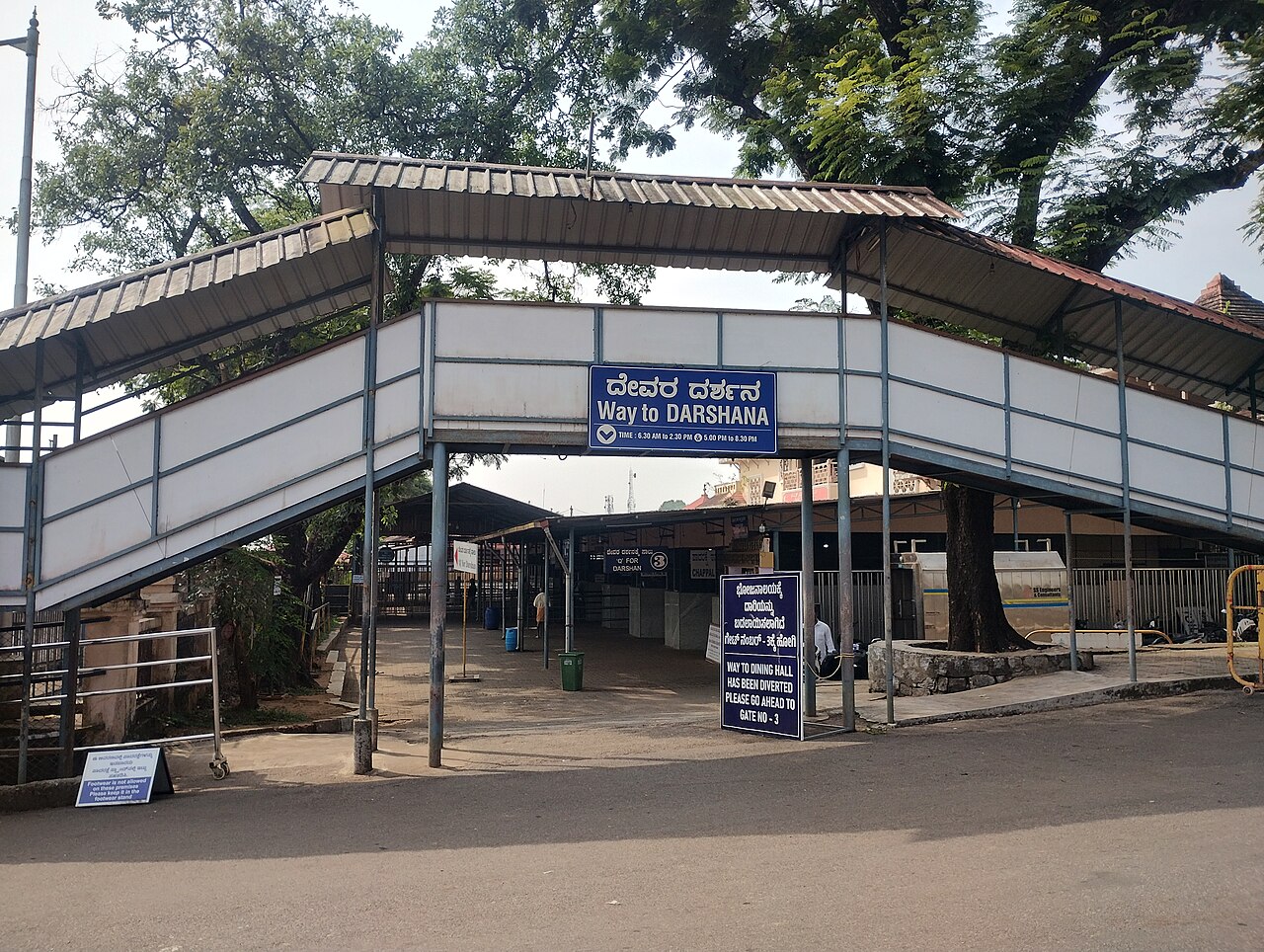
I don’t like queuing up for anything, even if it’s meant to gain a viewing-distance access to a religious idol. The same principle I follow for restaurants too. The only exception I can think of is maybe a queue to enter a theatre during film festivals.
This list is only for temples because I don’t think I have ever queued up to enter a church, a mosque, or a place of worship of any other faiths. Not that I frequent such religious sites usually either. But I don’t think I have ever seen a queue outside these places of worship. It’s been several years since I went to a temple alone and even more since I prayed. I recommend keeping these in mind while going through the list. Here goes. No, seriously.
- I saw a guard circling a queue outside a temple with a wooden stick. This was in April 2026 in Bombay and he was dragging the stick on the road making a dim screeching noise to warn unruly devotees of what might come at them if they misbehave. In India, it’s a common sight to see guards using sticks or whatever they can find their hands on to control a crowd but this one looked mischievous and improper.
- I saw a policeman hitting with a policeman’s stick (those polycarbonate, slightly better-looking ones) a devotee who had managed to stand slightly outside a single-filed queue. “Line mein khade rehne mein problem hai kya?” (Do you have a problem standing in line?)
- At least two temples I stood in serpentine queues for had huge steel water dispensers at steady intervals, with one or two steel tumblers shackled to each to prevent devotees from taking them home. In one of those temples, all the dispensers were empty throughout my queue circuit time of about two hours. Those same temples wouldn’t allow water bottles inside.
- Queue-cutters are aplenty in most temple queues I have stood in. It’s the imaginative reasons they give to justify their cutting the line that amuses me. Sly seniors aside, I have seen superbly healthy men and women cut lines because they:
- “Have someone already ahead, looking for them”
- “Know the chief pandit“
- “Just can”
- This last reason is so common across the Indian temples I have visited it makes temple queues no different than a lawless Indian street (which is every street these days).
- Some temples now have faster queues if you can pay up. Just pay a “small fee” (say, INR 100) to enter a line separate from the regular so that you can visit the sanctum sanctorum earlier than the general folks. Or the time taken from the entry to the main worship area is shorter. This is targeted towards people in a hurry, those who cannot stand or queue up for too long, or those who believe everything has a price and see no problem with its morality. Some temples have multiple such queues, that are priced higher, with slabs depending upon how much more you can shell out. Perhaps the fact that these queues are also as long as the regular ones says a lot about the population’s reliance on faith these days.
- If you have a newborn baby in hand, any devotee will let you cut the line and go first. If my observations don’t cheat me, the baby has to be anywhere from 0 to 4 weeks old to be eligible;[1]You can quote me on this. Women who’ve had a Caesarean delivery may also qualify for powers similar to that of the baby’s. up to two members, ideally parents including mother if it was a normal delivery, can accompany the baby. You can make the baby cry if you’re in a hurry. Here are a few ways that may or may not work.
- Some temple queues have the amazing feature of becoming stationary for a good number of minutes or hours. This is the maximum punishment for any devotee standing in a temple queue because you first start to slouch, having stood in one place surrounding sweat-soaked humans. Since half your life you’ve been sedentary, your knees go weak and you follow that uncle or aunty who’s already taken the floor for a mattress like a desert man’s mirage. The cacophony that erupts once the queue again starts flowing is maybe one of the top 100 relief moments ever recorded in history[2]This is an arbitrary statistic and definitely incorrect, so don’t quote me here.. The holdups happen when the deity (of the temple) is worshipped with more flowers and fire, or fed.
- Sometimes the temple queues can become so stagnant that they can flush the waste out of a human body. At this one temple in central India visited by scores of devotees daily, which is characterized by stairs specifically made for “darshan queues”, I found that certain areas, towards the final part of the queue circuit, were riddled with piss. Of course, no staff (yes, temples have entire bastion of staff now) was around to clean up the mess because devotees will bear anything to reach the sanctum. Piss is just water if your nostrils are already clogged with the stench of marinated human sweat and the drier floors ahead will clean your feet as you go.
- I was a notorious queue stander when I was a child and from what I remember, all the queuing up would bear good fruit. You would be able to harmoniously stand and pray for a good minute or two, standing in front of the deity, at least in the non-popular local or regionally-famous temples. Today, you’d be lucky to catch a glimpse, which is no wonder because you’re not only competing with the rude staff but also with the openings of the other queues filled with devotees who have paid to be there and therefore naturally feel they’re more deserving of the deity. It’s too bad that they can’t say they know the deity personally.
That would be the end of everything.
Footnotes